
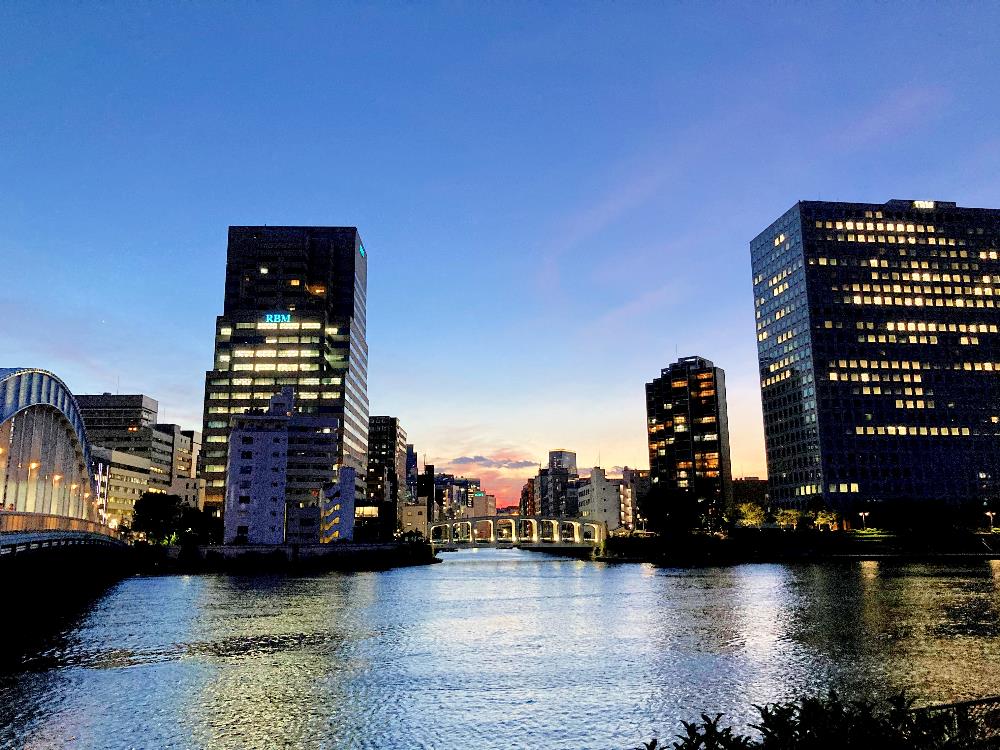
For that ‘special travel experience’, there’s nothing better than to wander around for an hour or two with no particular purpose in mind. You’ll discover all sorts of little places not mentioned in the standard tourist guides, and come away with some unforgettable experiences!
If you want to dive into the real life of Tokyo and its people – places not listed as ‘famous tourist destinations’ – please read on ……
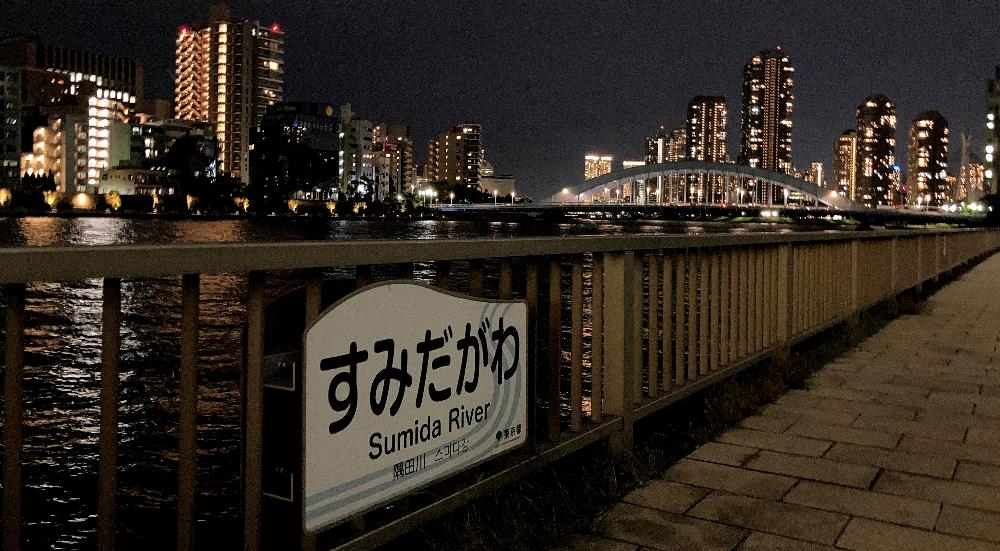
This article describes a walking tour known only to the cognoscenti of Koto-City – a sometimes known as ‘the Watercolor City’. It follows the course of the Sumida River – one of the largest in Tokyo – and involves crossing four different bridges.
Its purpose is to go beyond mere ‘sightseeing’ towards active observation of your surroundings. Notwithstanding, by the time you reach the end you will have taken in some of the most important temples and shrines of the Koto Ward. It takes about an hour for the average person – an hour and a half if you take it at a leisurely pace and really take your time to enjoy the scenery.
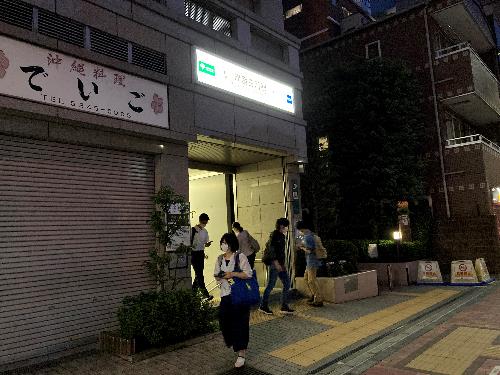
Start from Exit A3 of Kiyosumi-Shirakawa Station, at the junction of the Hanzomon and Oedo Lines. Walk straight on down the main street for about 8 minutes to the first destination, Kiyosu Bridge.
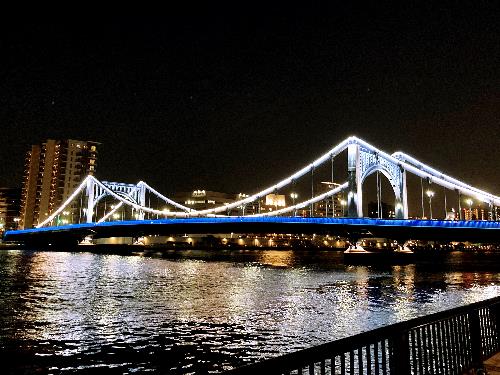
Kiyosu Bridge is a suspension bridge with a total length of 186.2m. It was built during the reconstruction project following the Great Kanto Earthquake. Completed in 1933, it has been designated as a national cultural asset. It was inspired by the Deutzer Hängebrücke [Deutz Suspension Bridge], a large suspension bridge in Cologne, Germany, which sadly did not survive 1945. This was widely thought to be the most beautiful bridge in the world at that time.

Indeed, the Kiyosu Bridge as seen from the Sumida River so closely resembles the Deutzer Hängebrücke that it was also called a ‘little view of Cologne’! It, and the Eitai Bridge further downstream, are the two most beautiful bridges spanning the Sumida River. Whilst the Eitai Bridge has a certain masculine quality, the Kiyosu Bridge displays a distinctively feminine grace.
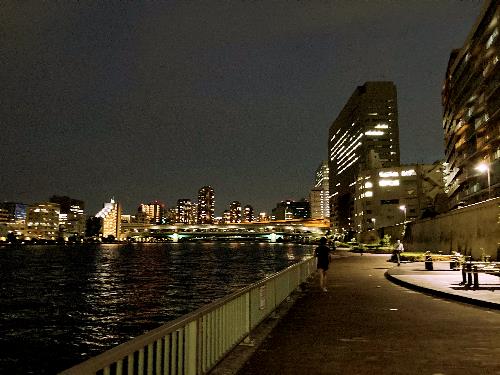
After crossing the Kiyosu Bridge, take the stairs down to the Sumida River Terrace, which is runs all along banks of the river. It is a paved promenade frequently used for walking and jogging, from which you can see much of the scenery of Tokyo.
It’s particularly spectacular at night, when the floodlit bridge can be viewed against a backdrop of the city lights.

Toyomi Bridge, at the far end of the Sumida River Terrace, is a a beautiful contrast of blue and white. It too is lit up at night and is another great place to enjoy the view at night. A short bridge built in an unusual and distinctive architectural style, it is often used as a film location.
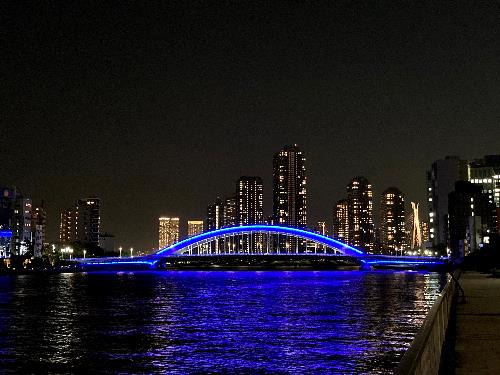
Eitai Bridge, along with Kiyosu Bridge, is the second of the two symbolic bridges that came to encapsulate the reconstruction of the downtown area that was destroyed in the Great Kanto Earthquake. It is the oldest existing tied-arch bridge in Japan. The first bridge on this site was a wooden one, built in 1698. It was made famous by the woodblock prints of the artist Utagawa Hiroshige and the first bridge in Japan with a span of more than 100 m. It too was based on a bridge in Germany – the old Ludendorff Bridge across the river Rhine – and it too has been designated as a national monument.

At night, it is illuminated in blue, creating a fantastic sight set against the background of brilliantly lit skyscrapers towering behind it. The cool blue also contrasts pleasingly with the warm red lanterns of the Sumida River’s well known night time yakata-bune (restaurant-houseboats). This is one of the best nocturnal viewing spots along the whole of the Sumida River.
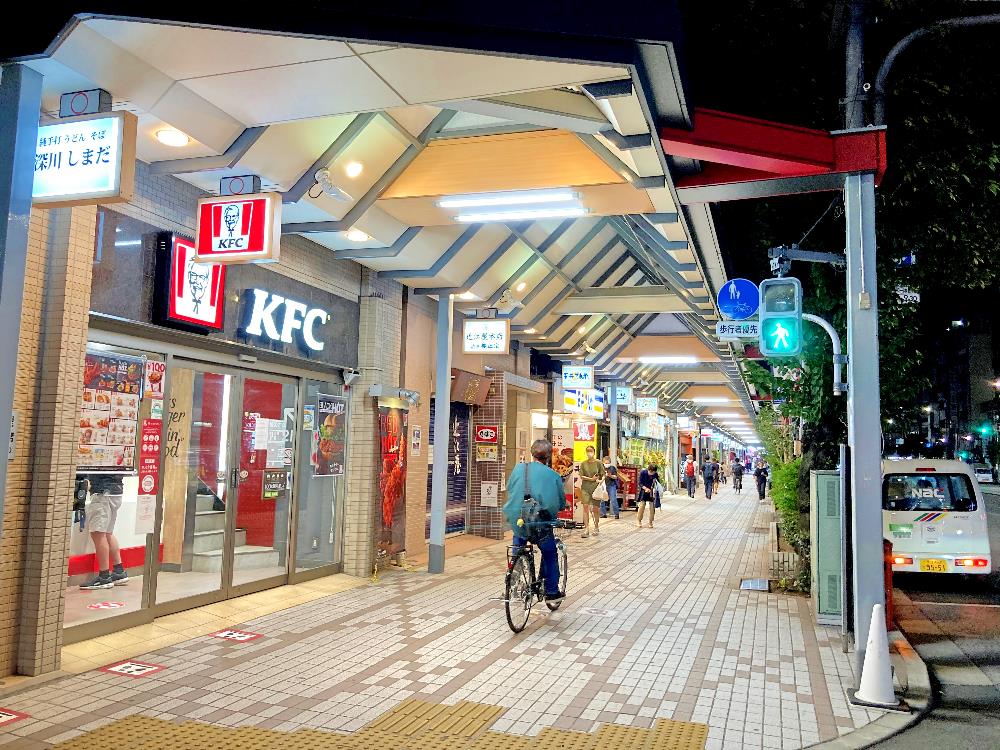
A 6-minute walk from Eitai Bridge will bring you to a shopping street full of local atmosphere. The arcade in front of the Monzennakacho station is a gourmet food and shopping area containing both chain stores and small private shops. In the daytime, it is crowded with housewives doing their shopping and older people out for a stroll; but at night the whole appearance of the place changes dramatically!

Izakaya [bars – literally ‘stay-and-drink places’] where you can enjoy alcohol and a meal with work colleagues, and fast food restaurants where people living alone can have a quick bite to eat – all seem to spring open at once! With so many places to choose from, this is an excellent place for dinner at the conclusion of your walk.

Founded in 1627, Tomioka Hachimangu is the largest shrine used as a place of worship by the people of the Fukagawa area. The Fukagawa Hachiman Festival held at this shrine is considered to be one of the three major festivals in the city of Edo. The largest festival is held once every three years, and attracts 30,000 spectators from all over the country.
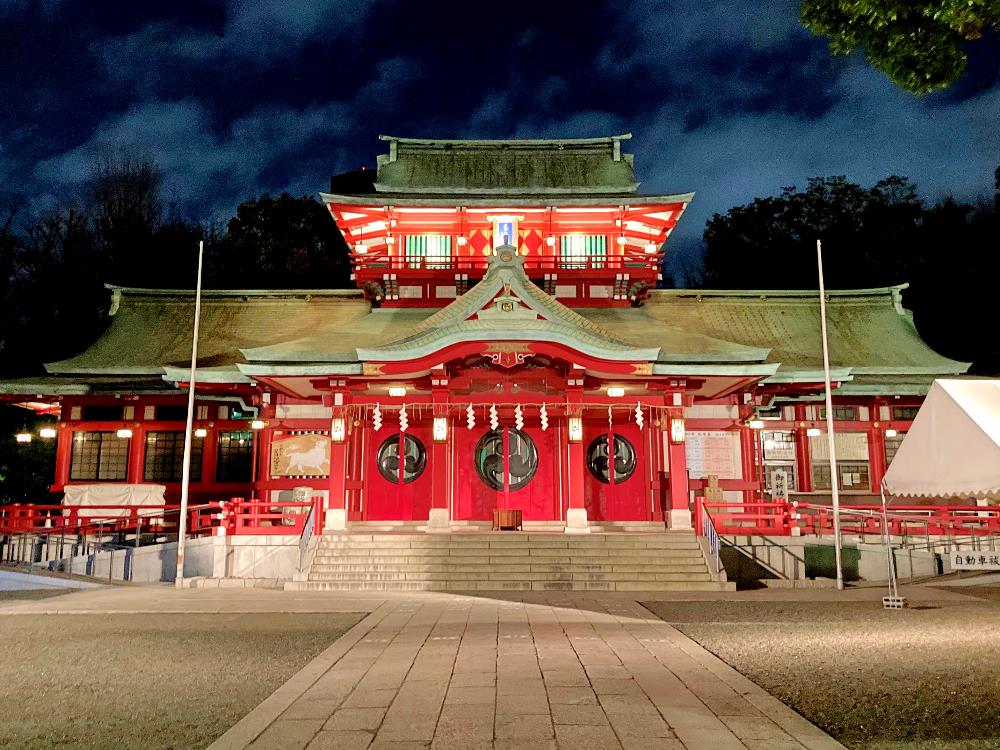
The huge red symbolic torii gate and main pavilion is lit up at night, creating the impression that one has entered a fantastic mythological landscape.
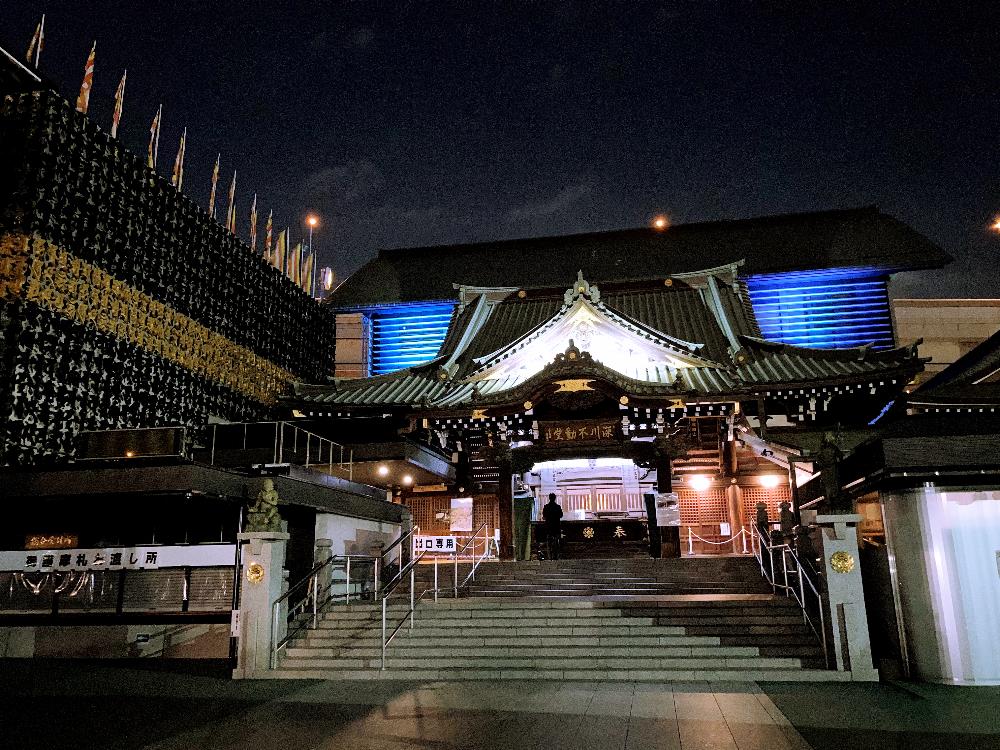
Located in the center of the city, Fukagawa Fudoson is a temple that dates back to 1703. Dedicated to Fudo Myoo (the Immovable One – acala naatha in Sanskrit – one of the objects of Buddhist veneration), monks pray here every day on behalf of the faithful.
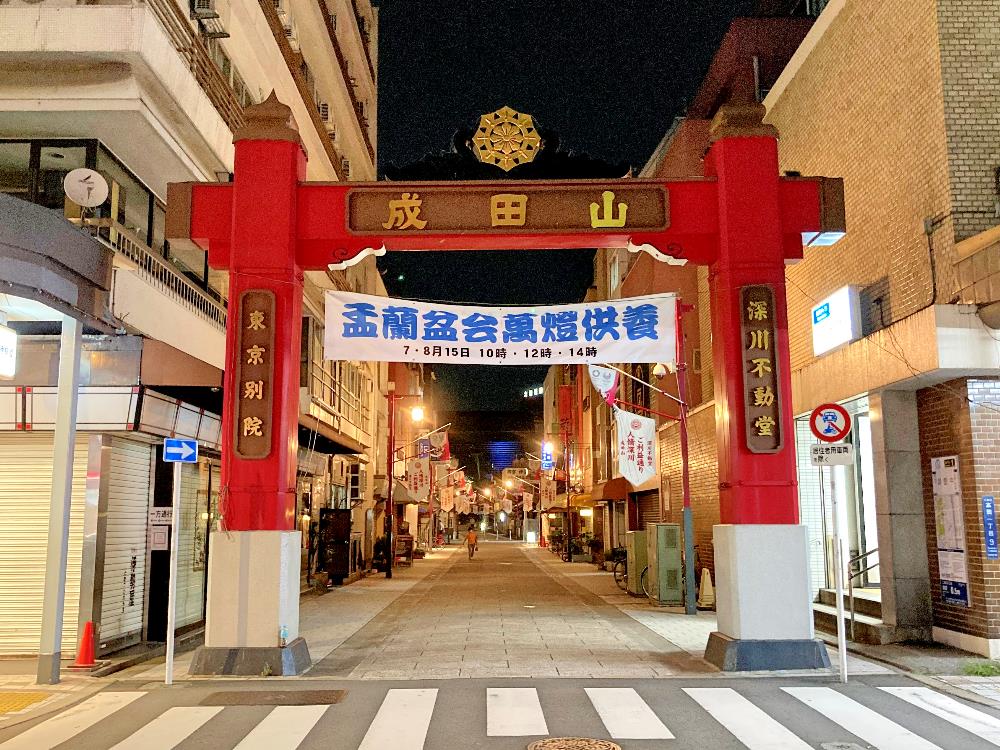
Although it has been severely damaged by various disasters such as the air raids in World War II and the Great Kanto Earthquake, it has been reconstructed each time and is still in use as a place worship by many people. In contrast to the liveliness of the daytime, the precincts at night have a solemn atmosphere, as people quietly go about their devotions.
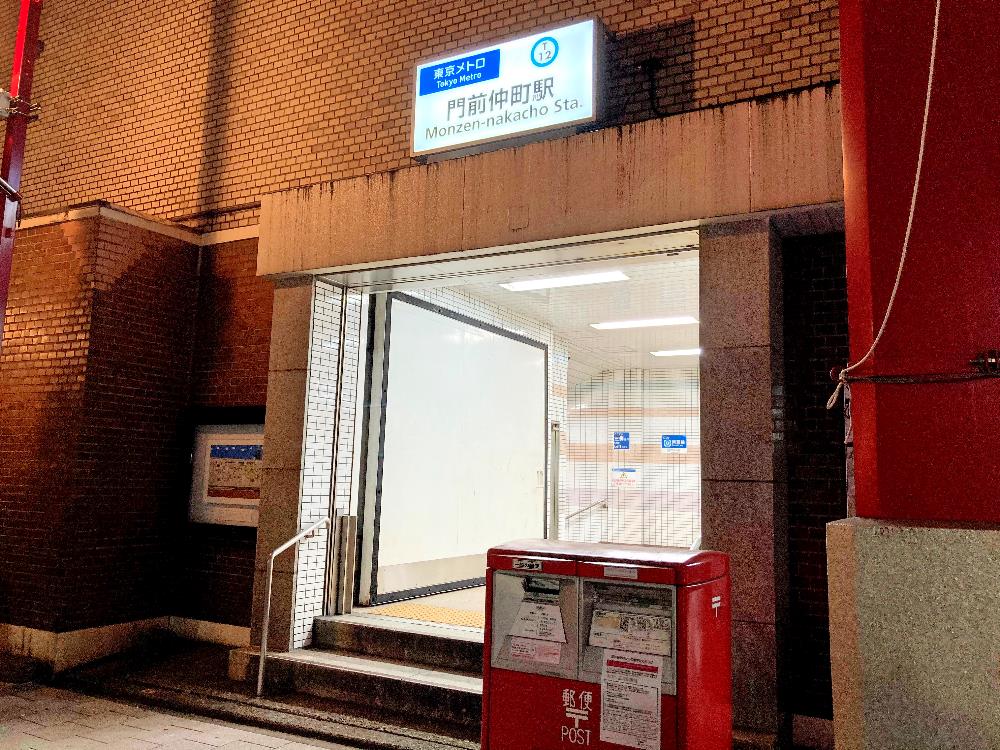
This walking tour ends at Monzen-nakacho Station, served by the Tozai Line and Oedo Lines. There are many restaurants in this area, so if you haven’t had supper yet, or want a quick drink before you go home, this place is ideal.
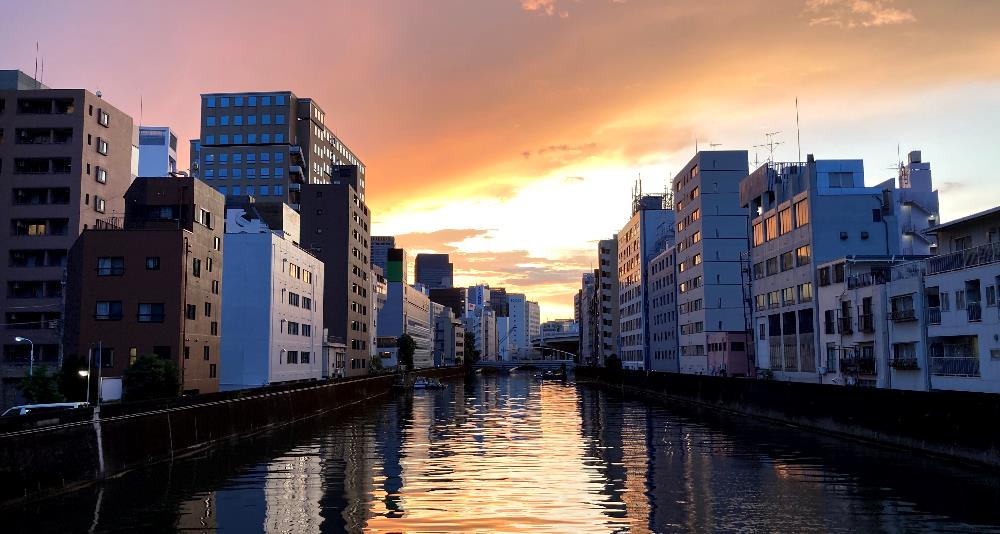
I hope you will enjoy this walk and enjoy the view at night whilst mingling with the local people of Tokyo. Unlike conventional sightseeing, which tends to just focus on the famous spots listed in the guidebook, this is a true opportunity to experience the lives of the locals and the authentic atmosphere of the city for yourself. The unexpected discoveries you make will live on in your memory, long after you have returned home.
So when you come to visit, please spare the time to take the ‘night walk’!
