
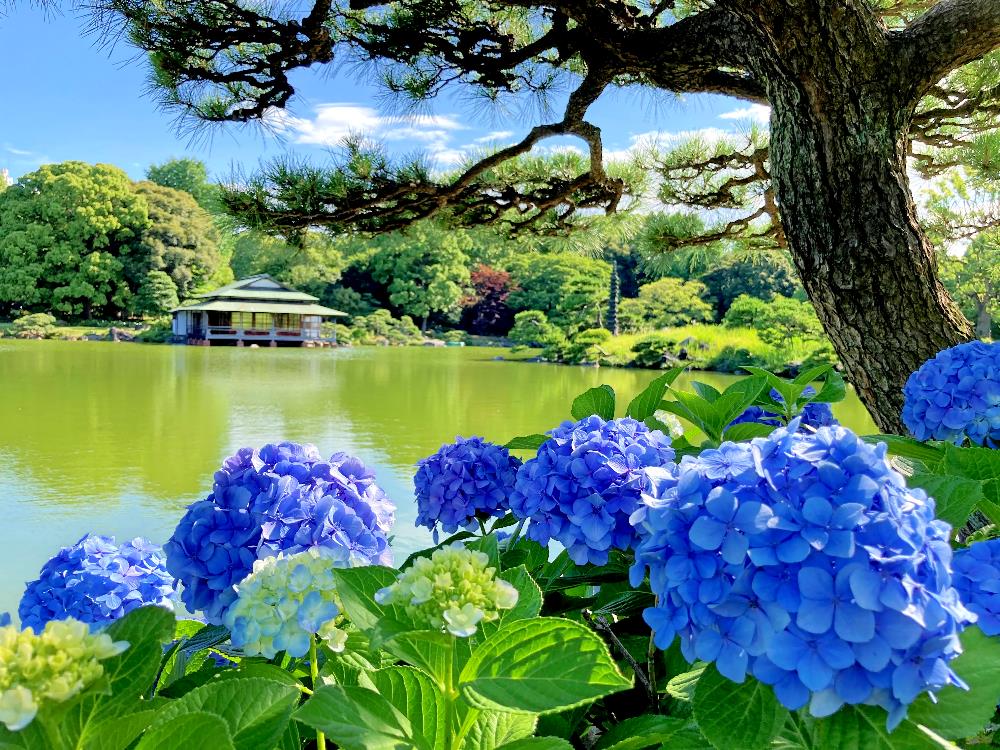
Kiyosumi Garden, just a three minute walk from the nearest station, has been designated a Place Scenic Beauty by the Tokyo Metropolitan Government. Most tourists have got no idea that there is a quiet and sophisticated traditional Japanese garden like this, slap bang in the middle of Tokyo!

This garden has survived a number of major disasters such as the fire bombings of World War II [when it was taken over to be used as air raid shelters] and the Great Kanto Earthquake of 1923.
Originally the site of a wealthy merchant’s residence in the Edo period, Kiyosumi Garden was subsequently purchased and maintained by Yataro Iwasaki, the founder of Mitsubishi, one of Japan’s three major conglomerates. Initially, it consisted of modern and luxurious buildings where senior Mitsubishi employees and important guests from overseas were entertained, but most of these burned down during the Great Kanto Earthquake.
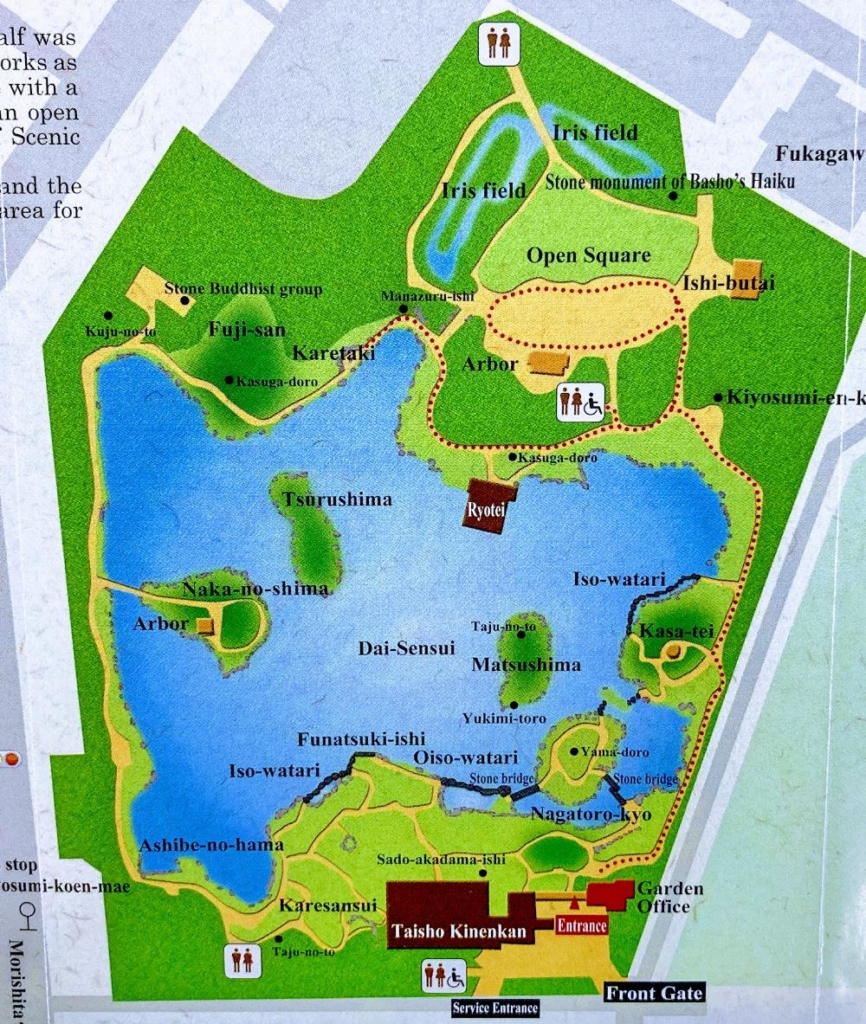
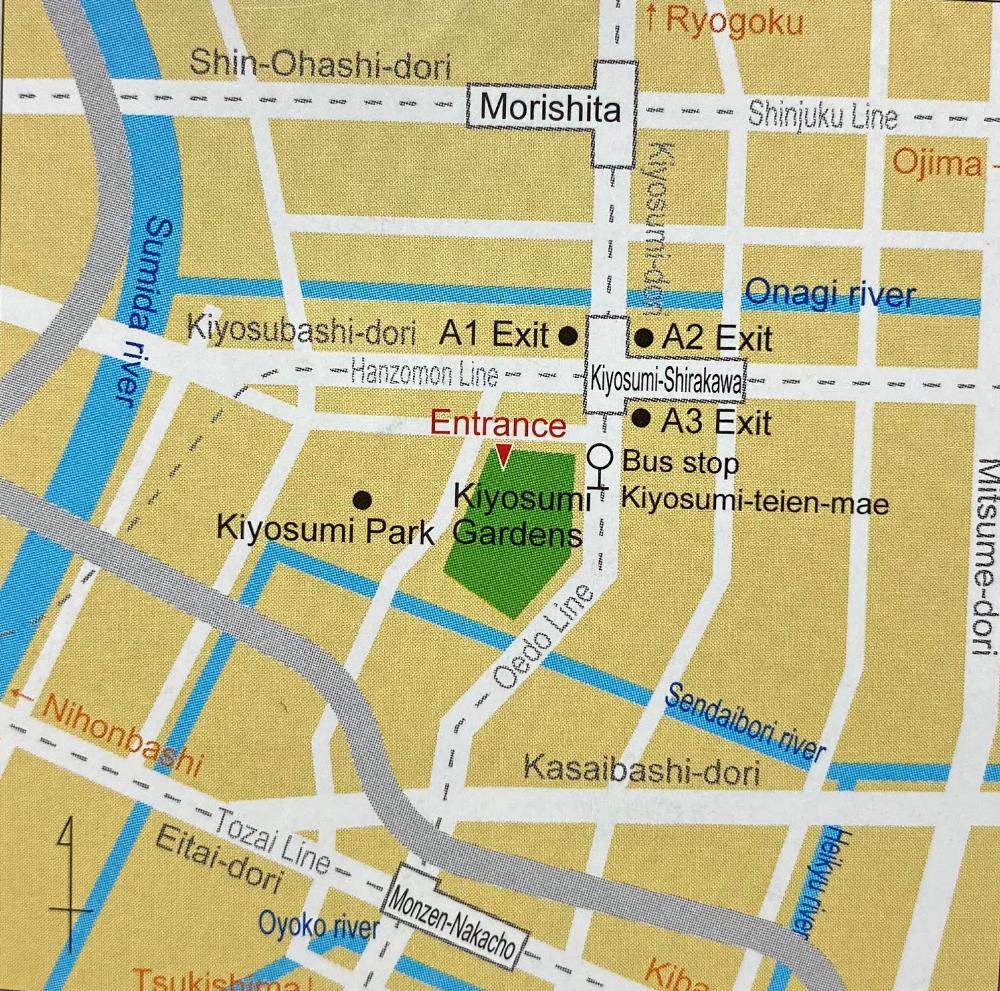
As you can see from the map, the garden is not all that big, so you can see all of it in an hour or so. It only costs 150 yen to get in, so it’s well worth a visit!
My personal recommendation is a picnic on the grassy open area at the back of the garden. Food and drink are allowed [sadly, no alcohol!] – so why not bring your pack lunch and take tea on the lawn!
Here are some of the highlights of the garden.
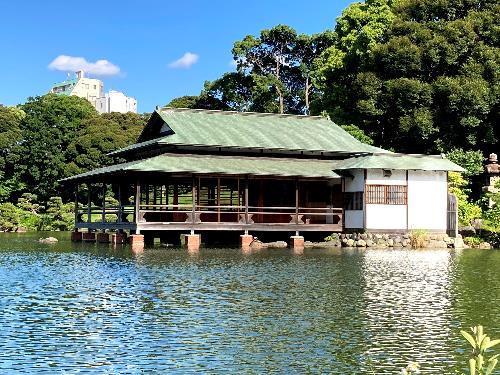
Ryotei 涼亭 : tea house for enjoying the cool breeze
Built on a pond, this elegant tea room is a designated Tokyo Historical Building. It was constructed by the Iwasaki family to welcome Lord Kitchener, who visited Japan in 1909 on behalf of the King of England. Fortunately it survived both the earthquake and the war; it’s still there to this day, and is currently being used as a conference room on a reservation only basis.
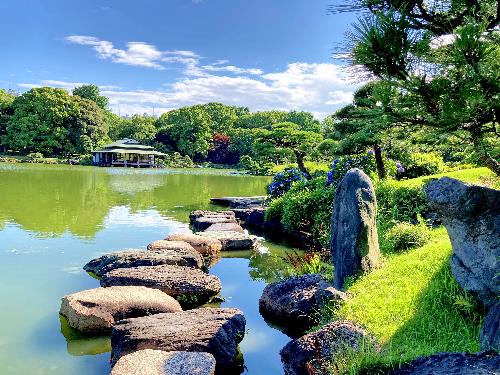
Isowatari 磯渡り : Rocky Shore Walk
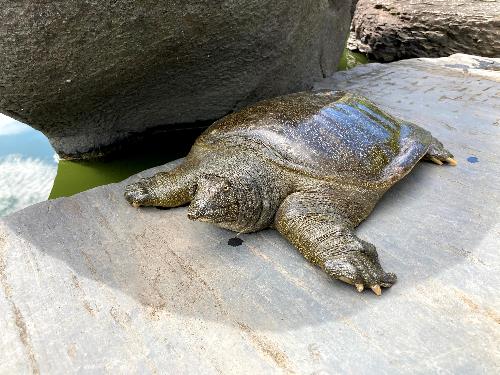
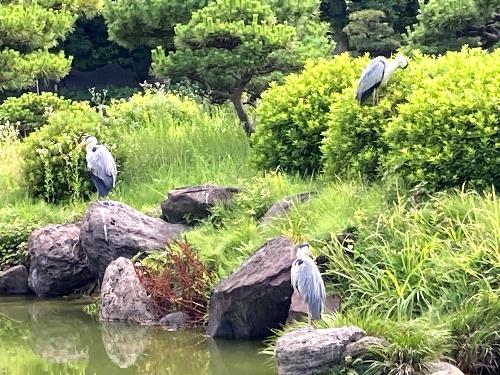
This is a path made of stepping stones laid on the edge of the water. Here you can you enjoy the spacious pond from near at hand, and observe the turtles and herons and other waterside creatures right up close. But just a warning – when it’s been raining the stones tend to become rather slippery – so be careful you don’t fall in!
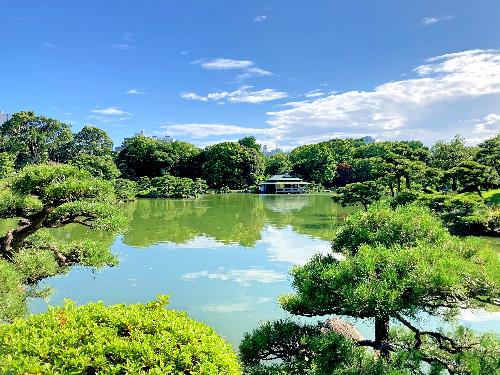
Dai-sensui 大泉水 : Big Garden Water Pond
This is a lake with three small islands in the middle. The reflections of the islands and buildings on the surface of the water make this one of the most important elements of the garden; they are constantly changing every day depending on the weather and the season, so you will never see the same thing twice, no matter how many times you go there!
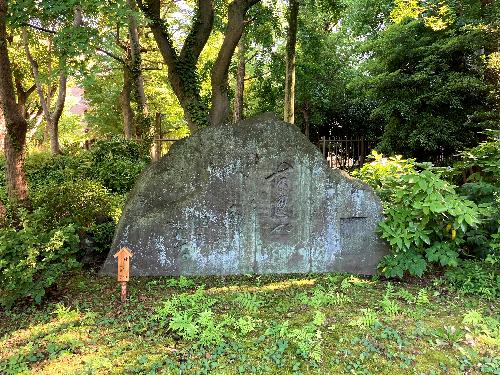
Stone Monument to Basho’s Haiku 芭蕉の句碑
This is a stone monument on which the words of the most famous haiku of the Japanese poet Matsuo Basho are carved:
‘Furu ike ya / kawazu tobikomu / mizu no oto’ 古池や かはづ飛び込む 水の音 (An old silent pond… A frog jumps into the pond – Splash! Then silence again.)”
Koto city was the starting point for Matsuo Basho’s very long journey all across Japan, and you can find Basho-related exhibits everywhere in the city – this is just one of them.
It’s located at the point farthest away from the garden entrance, so it does take a bit of finding – but it’s worth it!
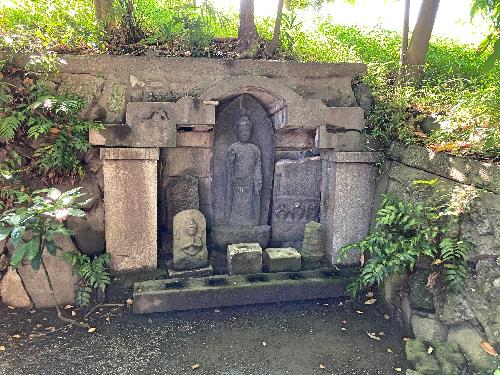
Stone Buddha 石仏群
This stone Buddha has been designated as the cultural property of Koto City. Like Basho’s monument, it too is rather hard to find!
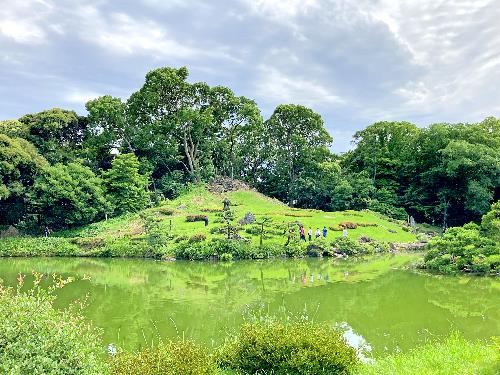
Mount Fuji 富士山
Of course it’s not the real Mt. Fuji – but it is the tallest and largest artificial hill in the garden! Trees such as Satsuki and Azalea are planted across it in horizontal lines to represent the clouds that billow over the summit of the mountain. If you visit during spring or early summer, you will see some very exquisitely coloured ‘clouds’!
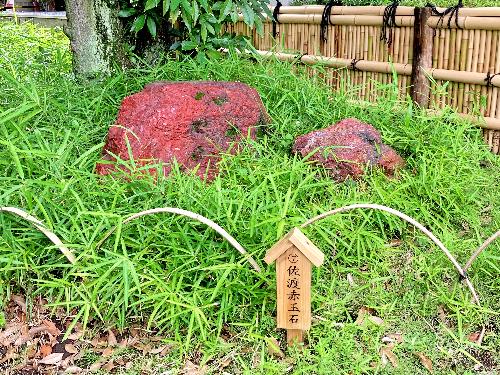
Miseki 名石 Famous stones
As you stroll through the gardens, you will find many beautiful and distinctive stones everywhere. Stones form an integral part of all Japanese gardens. Similarly, the pond in a Japanese garden stands for the waters of a river or the sea, and if there are rocks in the pond, they represent an island – or, if they are on the water’s edge, a rugged shoreline. These particular rocks were ordered by the Iwasaki family from quarries all over Japan and brought in using their own steamships.

Karetaki枯滝:Dry Waterfall
The stones of this ‘dry waterfall’ are placed as if they were part of a cascade of water flowing down the side of Mt. Fuji; all that’s missing is the water itself! The huge blue stone that stands in the center was shipped in especially from Kishu, and its beautiful colors and patterns can clearly be seen even from the opposite bank of the pond at the bottom.
One of the best things about the garden is being able to watch the aquatic wildlife such as turtles and wild birds. They are not shy, so you can easily get quite close to them them, provided you keep quiet and don’t make any sudden movements!

There is no other place in the center of the city where you can enjoy such a beautiful traditional Japanese garden. And it’s very easily accessible – so close to the station! I do hope you’ll have time to incorporate the Kiyosumi Garden into your Tokyo sightseeing – it’s not far out of your way!
Plan your visit
Admission fees
| Adult | 150 yen |
| Child | free |
Opening time
9:00am – 5:00pm
(Entry closed at 4:30pm)
Close days
Year-end holidays (December 29 to January 1)
Access
- Subway (Tokyo Metro Hanzomon line / Toei Oedo line) : 3 minute walk from exit A3 of Kiyosumi Shirakawa Station
- Bus① : (Toei Bus Route Mon-33) : 1 minute-walk from Kiyosumi-Teien-mae bus stop
- Bus② : (Toei Bus Route Aki-26) : 3 minute-walk from Kiyosumi-Shirakawa- station bus stop
Address : 3-3-9 Kiyosumi, Koto-ku, Tokyo, Japan, 135-0024
Tell :03-3641-5892
Web site : 清澄庭園|公園へ行こう! (tokyo-park.or.jp)