A foreigner might be put off tasting these dishes, if only because of the rather ‘challenging’ names. Don’t be! One of my British friends has become addicted to Okonomi-Yaki (savoury pancakes) – it’s a ‘must try’! Let us now introduce you to “Konamono” – which literally translates as “flour things”.
These are distinctively Japanese dishes, prepared either at home or in restaurants. Monja-yaki, a typical example of the ‘flour things’, is much loved by children, and brings back happy memories of having bought it years ago from the ‘mom-and-pop’ corner store and devouring it on the way home!
The preparation, ingredients and seasoning vary according to region – and according to who’s cooking it! So the version you might find in the Kanto district will be quite different from what you’ll taste in the Kansai area.
Okonomi-yaki (Japanese Pancakes)
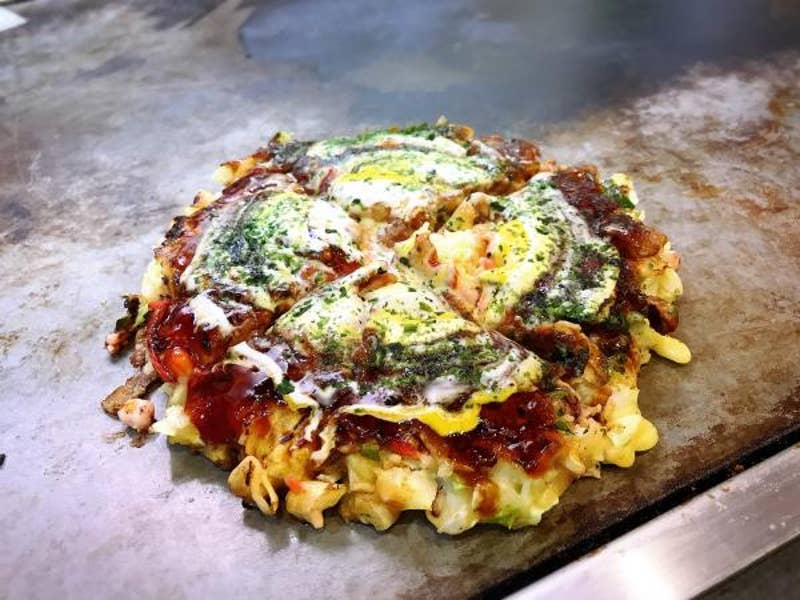
Okonomi-yaki is from the Kansai region. While there are a number of restaurants in particular specializes in okonomi-yaki, it can easily be cooked at home and is therefore a bit hit with the local housewives.
Kansai style Okonomi-yaki
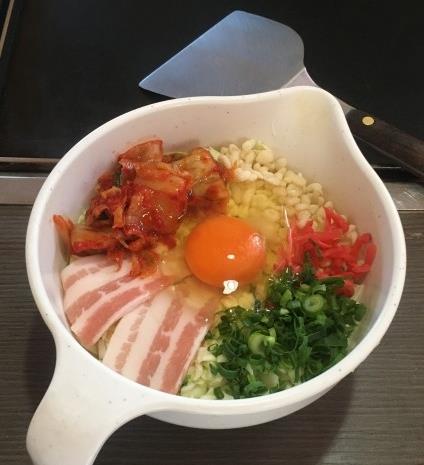
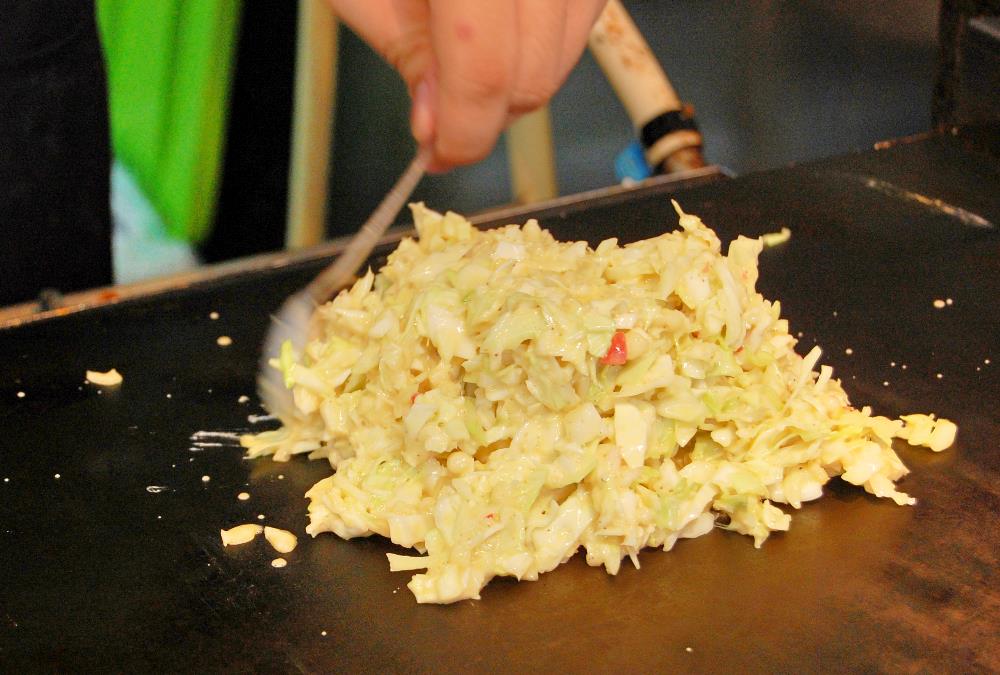
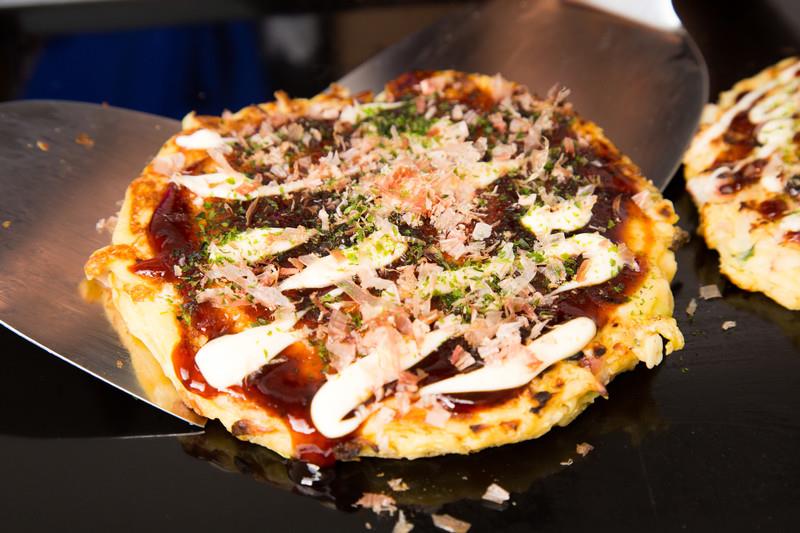
The distinctive feature of Kansai style okonomi-yaki is that all the ingredients are mixed together. It’s commonly to be found in places like Osaka. To make it, simply mix eggs, shredded cabbage and seafood such as prawns and squid into a batter of flour and water. Then, pour everything onto a teppan – a plate made of iron – and sprinkle fried sliced pork on top! For extra flavour, grated Japanese yam can also be added to the batter.
Hiroshima style Okonomi-yaki
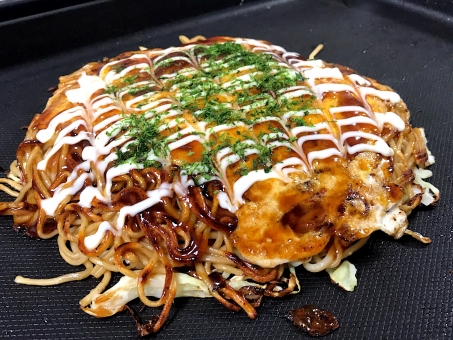
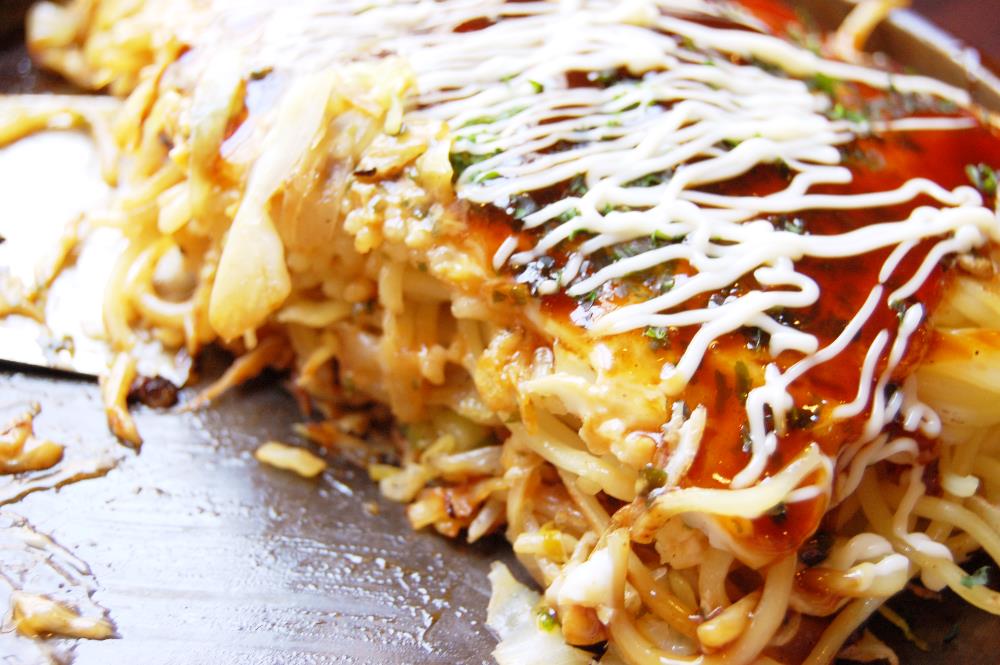
With Hiroshima style Okonomi-yaki, the ingredients are layered rather than all mixed up together. Here, the flour-and-water batter is poured onto a hot teppan to form a thin round shape like a crêpe. Then cabbage, fried Chinese noodles, red pickled ginger, green laver [edible seaweed], seafood, sliced pork and egg are added on top, one after the other. It is then turned over by “kote” or spatula so both sides end up fried to perfection!
Monja-yaki
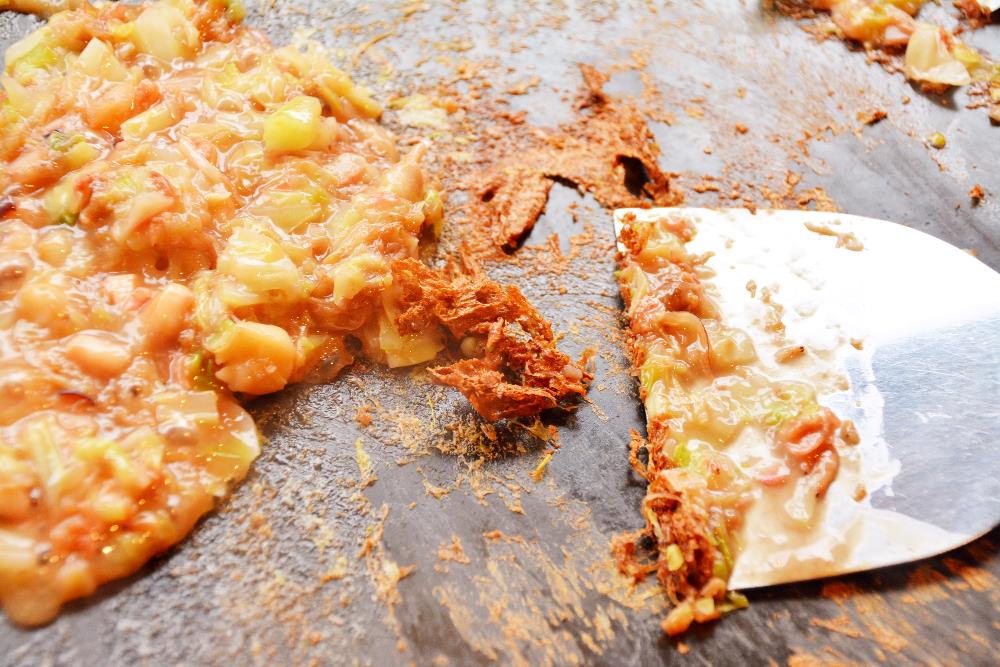
This is enormously popular amongst the people of downtown Tokyo. It’s made with a slightly more ‘watery’ batter than okonomi-yaki, generously flavoured with sauce and mixed with ingredients like cabbage and seafood – all fried up on the teppan.
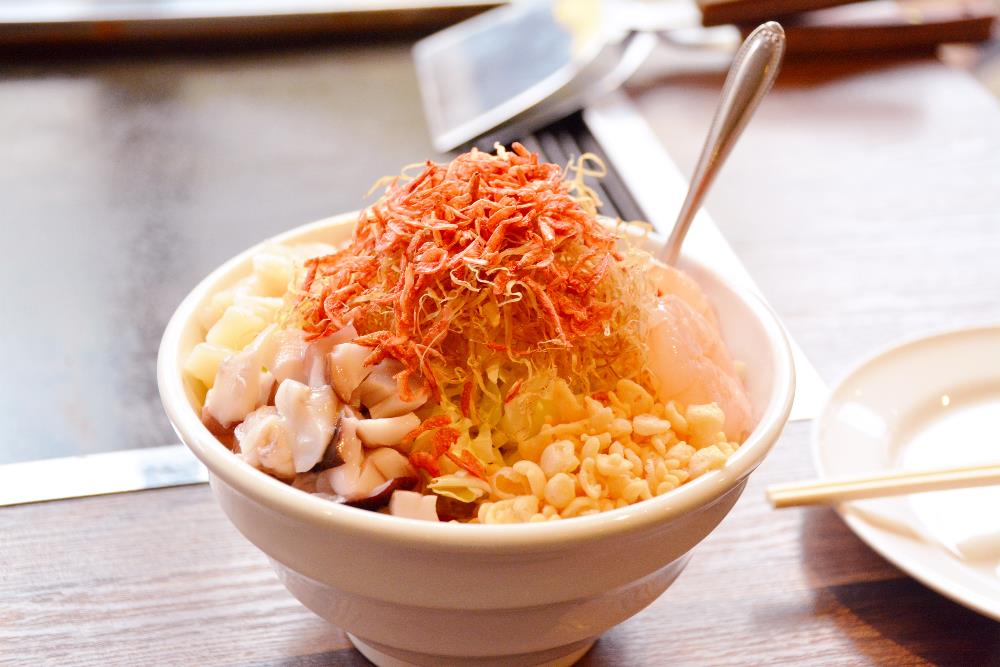
The secret of cooking this dish is to build the ingredients into a ‘wall’ on the teppan, and then pour the batter into the middle; make sure your ‘wall’ is leak-proof, so none of the batter can run out!
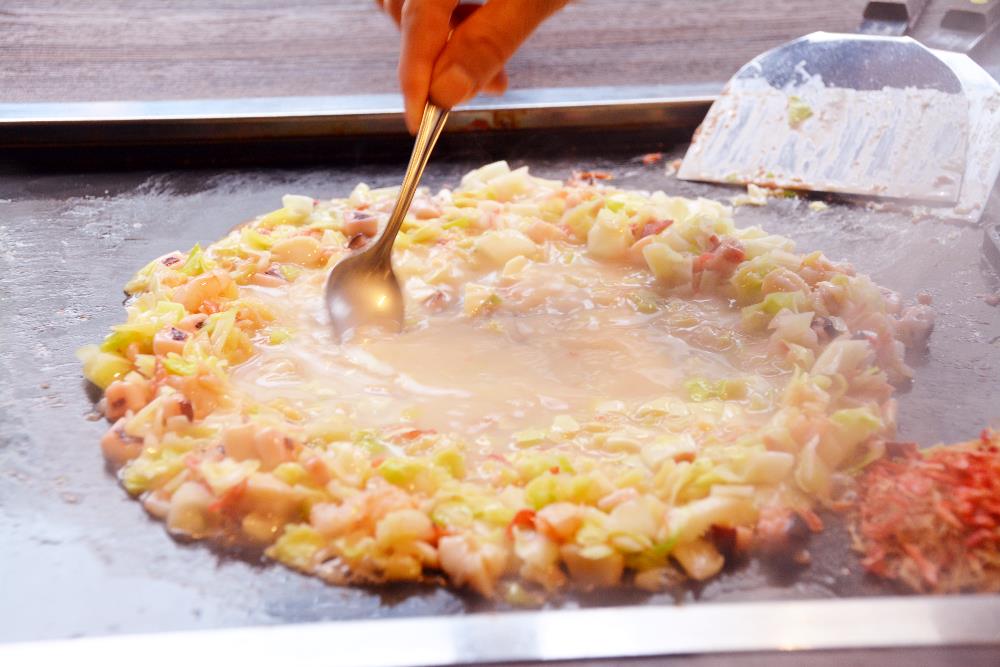
Then, once most of the water in the batter has boiled away, it’s time to ‘burst the dam’ and mix it up with the rest of the ingredients, and spread everything out flat to ‘cook through’. It’s eaten straight out of the teppan; each person is equipped with a “hagashi” or small spatula, which is used to squeeze the batter against the side of the teppan. A word of advice from a connoisseur – the ‘slightly burned part’ is the best bit!!
Tako-yaki

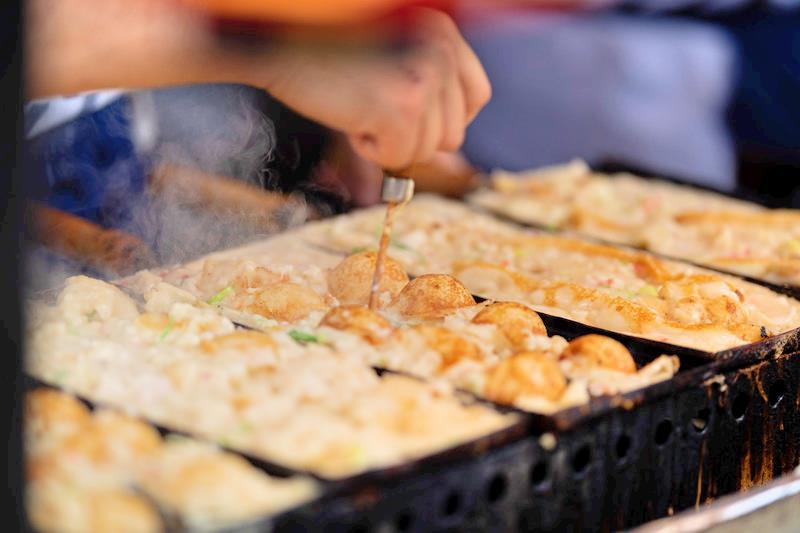
An institution in Osaka is this dish of chopped octopus, rolled into little balls of dough and baked. The balls should be about the size of a table-tennis ball – no bigger than 3cm to 5cm in size. The dough is made from flour and water or soup stock.
Takoyaki originated in the Kansai area; it was a street food eaten as a snack. In recent years, it has become a popular fast food throughout Japan, much enjoyed by children and adults alike, topped with various kinds of sauce, mayonnaise, green laver and dried bonito shavings. You can adjust the taste of all these dishes with different sauces and mayonnaise according to preference.
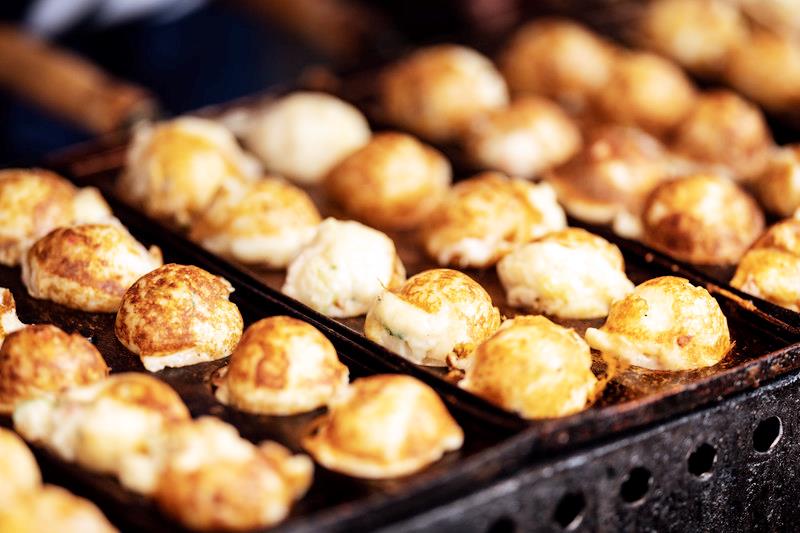
The great thing about them is that they are eaten as a social activity, with all your friends and family gathered together around the iron plate – very similar to a barbecue! Tako-yaki and okonomi-yaki parties are very frequent events in Japan.

When eating new kinds of food like this for the first time in a Japanese restaurant, you might not be quite sure what to do; don’t be afraid to ask! The friendly staff will be only too happy to help you!
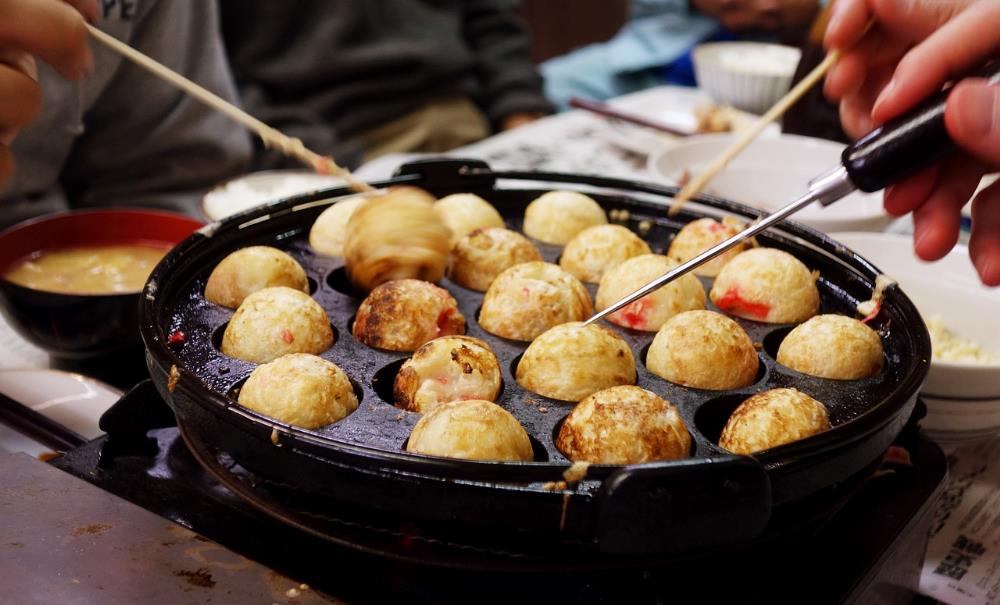
This style of eating is not only delicious, but also a ‘fun activity’ to look back on – it’s an experience not to be missed, when visiting our country!